
This article originally appeared in the December 2025 issue of Institutional Real Estate Americas. Written by Jon Pharris, co-founder and president of CapRock Partners, and republished here with permission from Institutional Real Estate, Inc.
[Download the original article on Inland advantage.]
Secondary and central markets gain traction as cost, infrastructure and demographics drive industrial demand
by Jon Pharris
The industrial real estate sector is entering a new phase of maturity and regional differentiation. Each market is evolving based on its unique combination of demand drivers, infrastructure capacity and supply pipeline. The pandemic-era surge in ecommerce activity prompted record development, resulting in temporary oversupply in several metropolitan areas. As inventory is absorbed and new construction activity declines, market fundamentals are beginning to normalize, setting the stage for a more balanced and sustainable growth cycle.
This rebalancing of supply and demand is expected to occur faster than many anticipate, driven by two key factors: a meaningful decline in new construction starts, reflecting more disciplined capital markets and improving leasing momentum, which began with large corporate users and is now broadening across a wider tenant base. As equilibrium returns, rental rates should remain healthy while landlord concessions such as free rent and tenant improvement allowances gradually shift back in favor of owners.
However, not all markets will recover at the same pace. Some regions face lingering oversupply, while others experience constrained demand or slower tenant velocity despite limited new deliveries. Identifying the markets where structural demand drivers outweigh these headwinds will be essential to capturing alpha in the current environment.
In the near term, select markets present compelling opportunities to acquire institutional-quality assets at or below replacement cost, especially in areas where high construction costs or regulatory barriers will limit future supply. Over the long term, logistics demand is expected to remain resilient, supported by manufacturing reshoring, population migration to growth regions, and the ongoing modernization of supply chains requiring more efficient industrial space.
An emerging dynamic influencing future development is power availability. The rapid expansion of data centers has created new competition for power resources, which could limit capacity for traditional industrial and manufacturing users in certain markets. Power availability is already a restrictive factor for hyperscale users, and similar constraints may increasingly affect industrial submarkets unless utility infrastructure expands meaningfully. This trend is likely to be most acute in markets with elevated data center activity.
Secondary western markets are capturing a growing share of industrial and manufacturing demand. This activity is being fueled by the ongoing reshoring and reindustrialization trend, often referred to as America’s “manufacturing renaissance.”
Disciplined deployment and market selectivity are key. Close monitoring of regional fundamentals and infrastructure dynamics helps identify markets and assets best positioned for durable, long-term value creation. The focus should remain on high-quality, well-located industrial assets in supply-constrained or structurally advantaged markets where demand resiliency and pricing power can be maintained through cycles.
Chain reaction
Ecommerce growth, reshoring and supply-chain diversification are reshaping investment strategies across North America. As companies prioritize resilience and reduce dependence on single-source networks, markets with strong connectivity to major ports, robust cross-border infrastructure and sustained investment in logistics and power capacity are well positioned to outperform. These markets are expected to experience stronger rental rate growth relative to less integrated or infrastructure-constrained regions in the years ahead.
This shift is an opportunity to strategically invest in both new development and value-added assets across the western and central United States. Many markets still have a large supply of older industrial product, with features that no longer meet the needs of today’s logistics and manufacturing users. Opportunities are being pursued to modernize these facilities or develop new ones, delivering efficient high-performance space supporting tenants’ evolving operational requirements.
The approach prioritizes locations and assets enhancing tenant competitiveness and promotes long-term regional growth and stability.
Beyond the coast
Coastal and gateway industrial markets, particularly Southern California, remain a critical first link in the nation’s supply-chain infrastructure. Proximity to the Los Angeles/Long Beach and Oakland port complexes, combined with California’s substantial consumer base, ensures the state will continue to play a central role in the flow of goods across the United States.
In the near term, market performance may be tempered by tariff uncertainty and broader supply-chain volatility. Nonetheless, the long-term fundamentals remain highly favorable. The scarcity of developable industrial land, coupled with increasingly stringent entitlement and environmental regulations, will continue to constrain new supply, supporting both rent growth and asset values over time.
At the same time, California’s increasingly complex regulatory and cost environment is accelerating the migration of some users and investors to other regions offering greater affordability, scalability and operational flexibility.
Secondary western markets such as Las Vegas; Phoenix; Reno, Nev.; and Salt Lake City are capturing a growing share of industrial and manufacturing demand. This activity is being fueled by the ongoing reshoring and reindustrialization trend, often referred to as America’s “manufacturing renaissance.”
In addition to this new manufacturing demand, traditional logistics and ecommerce uses continue to drive absorption in these markets. Many of these metros also benefited from significant in-migration during and after the COVID period, as favorable cost-of-living dynamics, flexible work trends and business-friendly policies supported both population and economic growth.
Texas stands out as one of the most dynamic industrial markets in the country. The state benefits from a large and skilled labor pool, sustained population growth, and a business-friendly regulatory framework supporting both occupiers and developers. Affordable housing, favorable tax policies and a diversified economy have further enhanced Texas’s appeal as an enduring logistics and manufacturing hub. Secondary western markets are capturing a growing share of industrial and manufacturing demand. This activity is being fueled by the ongoing reshoring and reindustrialization trend, often referred to as America’s “manufacturing renaissance.”
In addition, Texas is strategically positioned to benefit from expanded cross-border trade with Mexico, particularly with a new trade agreement expected in 2026, though its development-friendly environment and low barriers to entry also create the risk of over-supply in certain submarkets. This relationship strengthens Texas’s role as a critical gateway for North American manufacturing, nearshoring and supply-chain integration.
A disciplined, data-driven approach to site selection is essential. Understanding local submarket dynamics, including variations in vacancy rates, tenant profiles and demand segmentation by building size, is important to identifying durable investment opportunities and mitigating potential downside risk.
While some of these markets are experiencing temporary adjustments due to elevated new supply or the effects of leasing pull-forward, the long-term fundamentals remain compelling. We are seeing sustained demand for smaller-bay and midsize facilities as businesses refine their distribution and manufacturing strategies to be closer to end users. For developers and investors with the right experience and vision, the western and central United States present a diverse range of opportunities continuing to rival the traditional coastal hubs.
Top hubs
Certain logistics hubs and metropolitan areas are currently demonstrating the greatest resilience and growth potential.
CapRock Partners targets industrial markets characterized by strong fundamentals, business-friendly environments and durable long-term growth drivers. While a few metropolitan areas stand out today as particularly resilient, the current economic climate demands deeper market insight than at any time since the global financial crisis. Understanding the nuances of individual submarkets, tenant mix, vacancy trends and construction pipelines has become critical, underscoring the importance of having on-the-ground expertise and local specialization in industrial real estate.
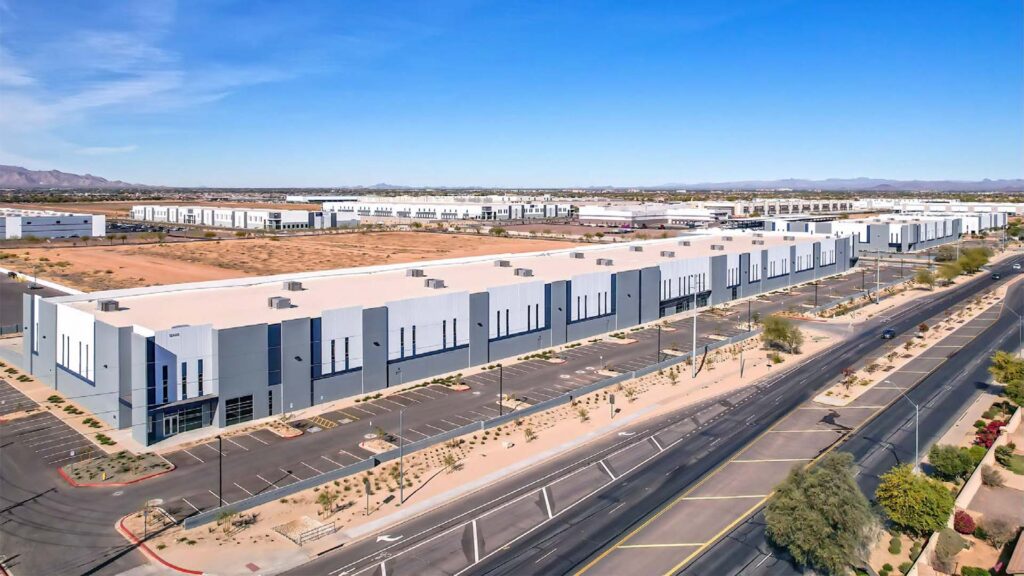
Phoenix continues to demonstrate exceptional strength, supported by steady population and job growth alongside major investments from global technology and healthcare firms. The metro’s expanding infrastructure and diversified economic base position it as a key logistics and manufacturing hub. The ongoing semiconductor manufacturing boom, combined with active data center development, is creating powerful new demand drivers across the region. Provided adequate power capacity is maintained, Phoenix is poised to remain one of the most dynamic industrial markets in the western United States.
CapRock recently entered the Houston market with the acquisition of Kennedy Greens Distribution Center, a 524,000-square-foot class A industrial facility fully leased to credit tenants. The North Houston submarket is one of the city’s most active and supply-constrained logistics nodes, benefiting from durable tenant demand and a balanced, diversified economy. Leasing activity across the broader Houston market is now nearly on par with Dallas–Fort Worth, despite Houston’s industrial base being roughly two-thirds the size, highlighting the market’s continued strength and absorption potential.
CapRock will commence construction on multiple projects within the Dallas–Fort Worth (DFW) market over the next six months. DFW’s pro-business climate, extensive infrastructure and growing corporate base make it a compelling location for logistics, ecommerce and light manufacturing users.
Overall, during this comparatively softer leasing environment — relative to the unprecedented demand surge experienced during and immediately following the COVID period — most occupiers are upgrading into newer, more functional class A space. As a result, net absorption is heavily concentrated in modern facilities offering superior amenities, efficient layouts and power availability.
With property values recalibrating, particularly in Southern California, current market conditions represent an attractive entry point for long-term investors. CapRock’s strategy focuses on high-quality logistics and industrial assets in markets with enduring fundamentals, diversified demand drivers and structural growth potential. While near-term volatility may persist, the long-term outlook for U.S. industrial real estate remains strongly positive across nearly all major markets.
Case study: Recycling capital strategically
CapRock Partners held a final closing of CapRock Value-Add Industrial Fund IV. The fund is designed to acquire, reposition and selectively develop industrial properties in high-growth logistics markets throughout the western and central United States — markets where tenant demand for modern, well-located industrial space remains robust and long-term fundamentals are compelling. The fund primarily invests in and develops class A industrial assets intended for long-term value creation, focusing on modern, functional buildings that can appreciate in value through market cycles.
The fund’s strategy includes actively recycling capital during the investment period to maximize performance and redeploy gains into new opportunities. As early investments are stabilized and monetized through leasing, repositioning or selective dispositions, some of that capital can be redeployed into additional opportunities that meet the fund’s objectives. This approach allows returns to be compounded and portfolio diversification to be maintained throughout the investment period.
Fund IV has committed more than half of its capital across a diverse mix of value-added and development projects totaling approximately 3 million square feet in California, Nevada and Texas. By targeting high-barrier, infill submarkets with durable tenant demand, the fund is positioned to realize gains from early investments, with proceeds available for reinvestment in similarly attractive assets.
While some markets are experiencing short-term fluctuations from increased supply or leasing pull-forward, confidence remains in the long-term strength of industrial real estate fundamentals. Demand for a range of modern facilities remains resilient, and strategic recycling of capital supports the capture of these opportunities while enhancing overall fund performance.
— Jon Pharris
Value-added outlook
Investor return expectations for value-added industrial strategies are shifting as market conditions and capitalization rates evolve, creating new opportunities for risk-adjusted gains.
Sophisticated investors increasingly view the current environment as a compelling re-entry point into the industrial sector. After a period of sharp repricing, capitalization rates have expanded meaningfully from their COVID-era historic lows, creating opportunities to acquire high-quality assets at more attractive entry bases. At the same time, debt markets have stabilized. Liquidity is available, and financing is now more appropriately priced relative to underlying risk.
Leasing demand is strengthening nationwide. According to CBRE, industrial leasing is on pace for the second-best year on record, driven by the continued strength of bulk leasing from third-party logistics providers (3PLs) and manufacturing users. Year-to-date through third quarter, bulk leasing reached 432.8 million square feet, nearly 10 percent higher than the same period last year. 3PLs accounted for 36 percent of all transaction volume, with nearly three-quarters of those leases being new deals — a clear indication of expansionary demand. Meanwhile, manufacturing leasing activity grew by more than 100 percent year-over-year, led by industries such as data center servers, solar panels, pharmaceuticals and packaging materials. Much of this demand is tied to reshoring and onshoring activity, as occupiers bring final assembly and distribution closer to end markets to enhance quality control and reduce tariffs and transportation costs.
This renewed leasing momentum is improving sentiment and reinforcing investor confidence the industrial market is stabilizing. The anticipated commencement of a rate cutting cycle will further enhance liquidity conditions and may serve as a positive inflection point for asset values. Together, these dynamics are setting the stage for a new phase of the industrial cycle where value-added investors can generate outsized risk-adjusted returns through selective acquisitions, repositioning and development.
Ultimately, disciplined capital understands timing the precise bottom of a market cycle is nearly impossible. The consensus view is in the early stages of recovery, an opportune moment to lean into high-conviction markets. By partnering with specialized, cycle-tested operators in the industrial sector, investors can position themselves ahead of broader market normalization and capture meaningful upside as fundamentals strengthen.
Opportunities ahead
The U.S. industrial real estate market’s new phase of regional differentiation and measured growth is driven by ecommerce expansion, manufacturing reshoring and supply-chain diversification. Inland and secondary markets, including Texas, Phoenix and Salt Lake City, are capturing increasing demand due to affordability, infrastructure and favorable demographics, while coastal markets remain critical for logistics but face constraints from high costs, regulatory complexity and limited developable land.
Understanding local nuances, mainly variations in vacancy rates and tenant demand across building sizes, is essential for disciplined investment.
Amid these evolving dynamics, investors and developers who prioritize data-driven site selection, modern class A facilities and supply-constrained submarkets are positioned to benefit from resilient demand and sustained value creation. Overall, the market presents opportunities for strategic investment and portfolio optimization, with fundamentals supporting sustainable growth across both established and emerging industrial hubs.